How we work
Tile and natural stone is the whole business. This page is about the order the work happens in, and why the parts you never see are the ones worth paying for.
01
Layout, before anything else
The first hours of a job produce nothing you can photograph. Somebody measures the room, snaps chalk lines and dry-lays enough tile to find out what the space actually wants to do — where the pattern starts, which cut lands at the threshold, whether a wall is square enough to set off. Get this wrong and no amount of good tiling afterwards saves it.
02
Then the substrate
Tile is only ever as flat as what is under it, and only ever as still. Floors get leveled and prepared before anything is bonded; a substrate that moves will telegraph every joint within a season, and by then the only fix is to take it all up again.
03
Then the water
In a wet area the waterproofing and the membrane go in next, and the pan is pitched to the drain and tested before a single tile is set. This is the part of the job nobody sees, nobody photographs and nobody asks about — and the only part that can cost you a ceiling.
04
Then, finally, tile
The setting itself is the fastest part and the part everyone pictures when they think about a tile job. It goes quickly because the decisions were made days earlier. Grout, seal, and a walk of the room together at the end.
What that looks like
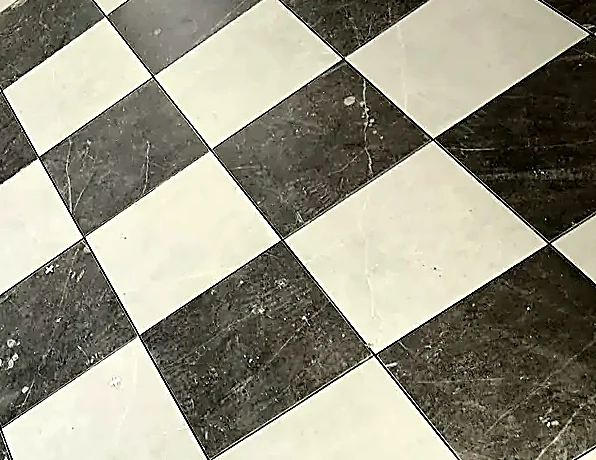
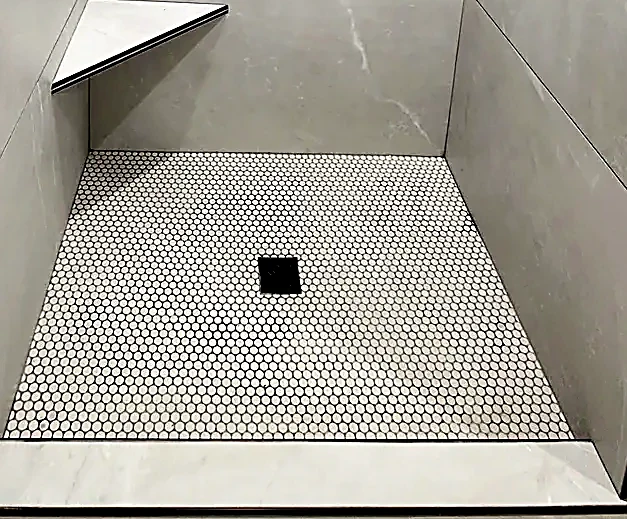
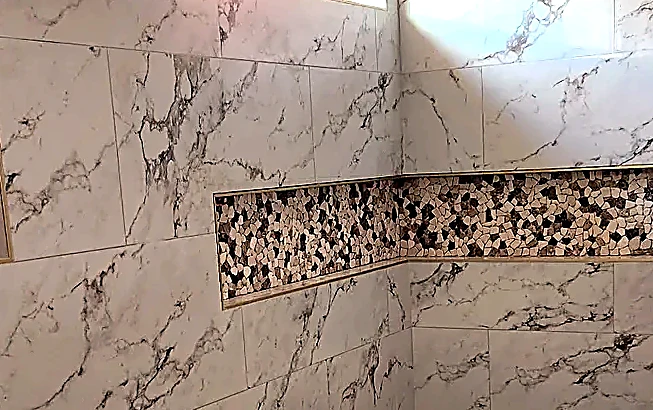
On the photographs.
Every image on this site is our own work, taken on site, on a phone, by whoever was standing there. Several were shot the day the tile went down — you will see bare studs at the edge of frame, a shop vac, a floor that has not been cleaned yet. We have left them that way on purpose. The alternative is stock photography of somebody else’s bathroom, and you would have no way of knowing.
See all fourteenWhat we take on
- Homes
- New builds and remodels — bathrooms, kitchens, entries, whole floors, fireplace surrounds and feature walls.
- Commercial
- Offices, retail, restaurants and public spaces, with slip resistance and transitions specified for the setting rather than chosen by eye.
- Repairs
- Cracked and loose tile, failed grout, and replacement matched into an existing field — including an honest answer when a repair will always show.
- The difficult layouts
- Diagonal fields, herringbone, encaustic-look pattern, pebble and mosaic inlay, book-matched stone. The ones where the setting out is most of the job.
Come and see the room.
That is genuinely the whole pitch. Somebody comes out, measures it, looks at what is under the floor, and tells you what it will take.