Every line is a decision.
Tile and natural stone installation across St. George, Cedar City and the rest of Southern Utah. We take on the layouts that are easiest to get wrong — diagonal fields, herringbone, patterned floors, book-matched stone.
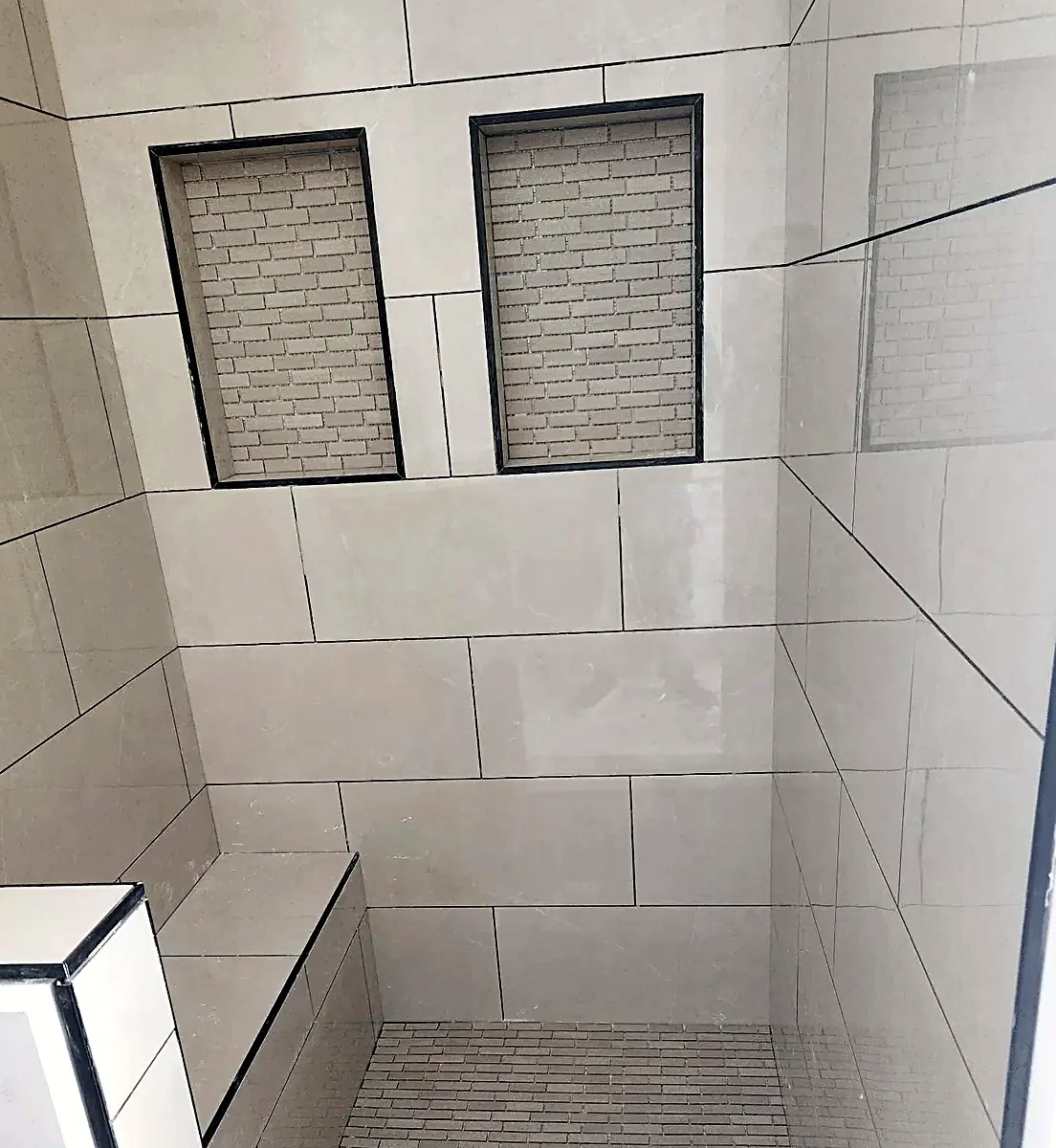
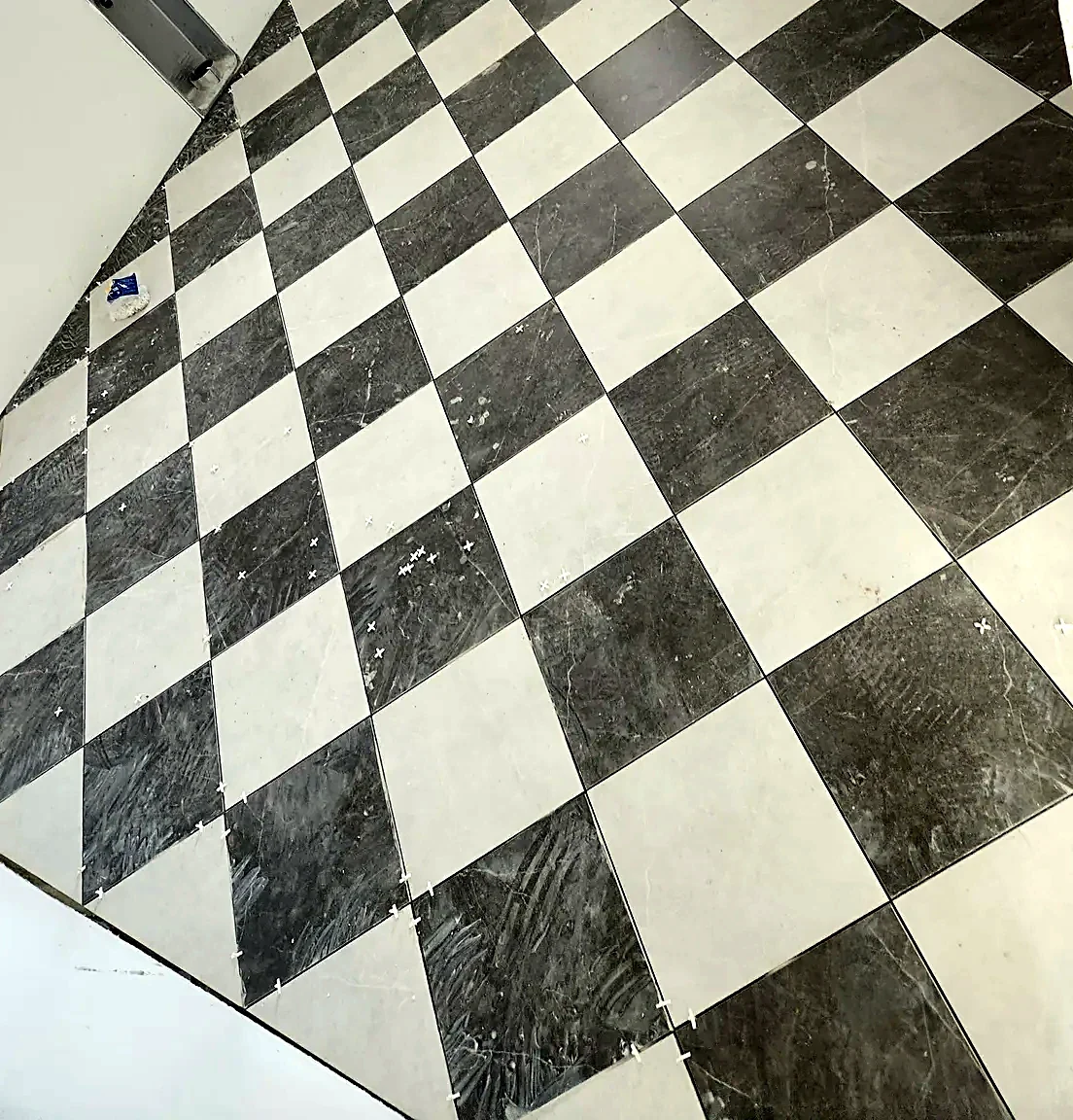
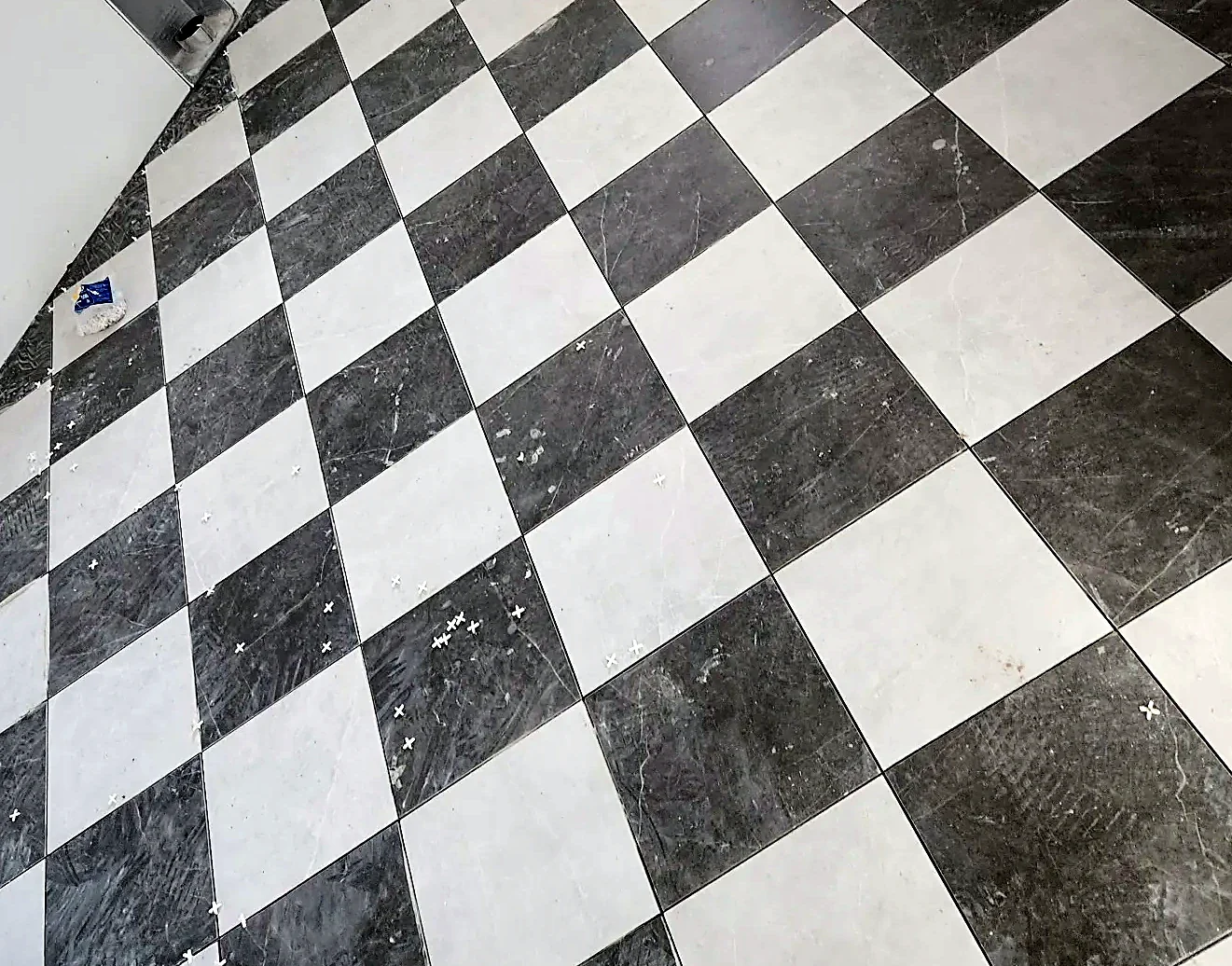
Above · diagonal checkerboard in honed marble, Washington County.
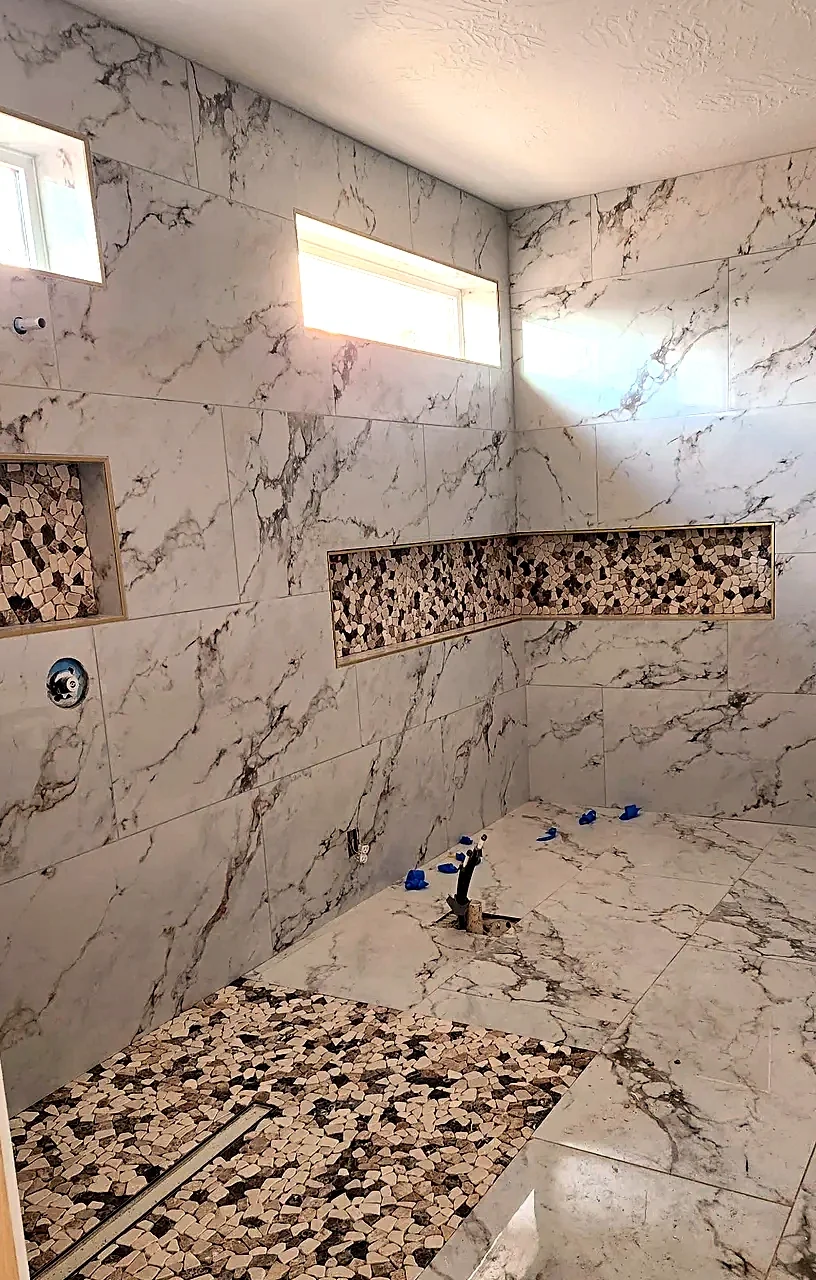
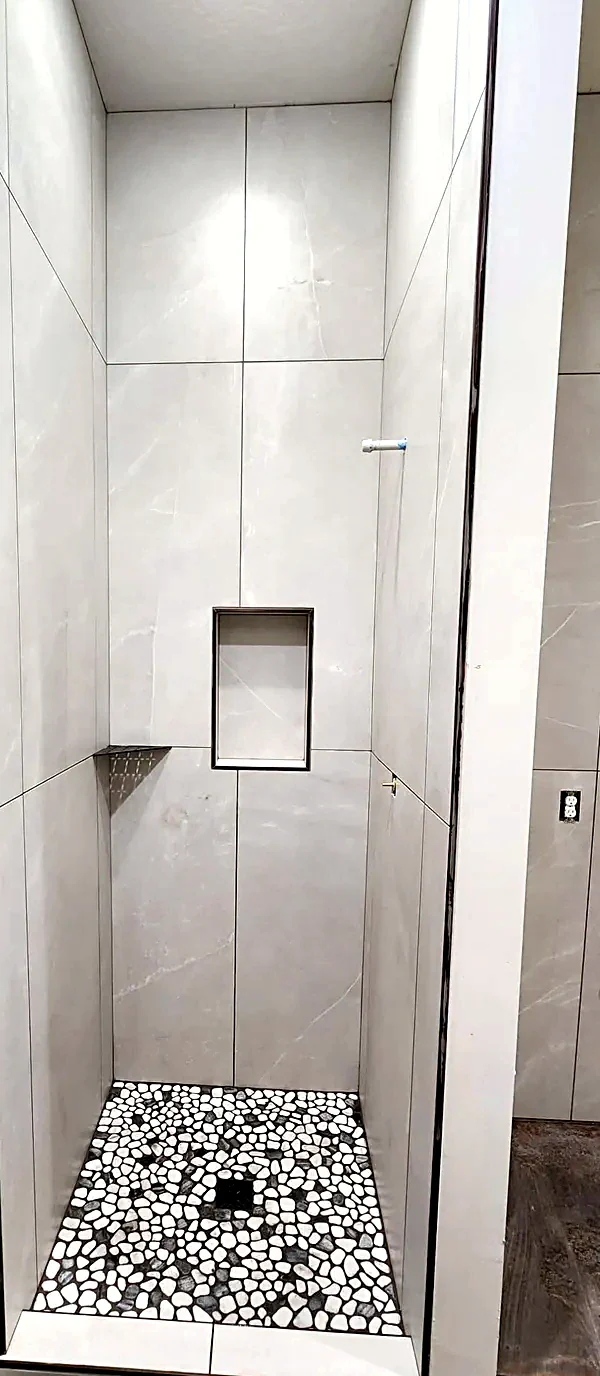
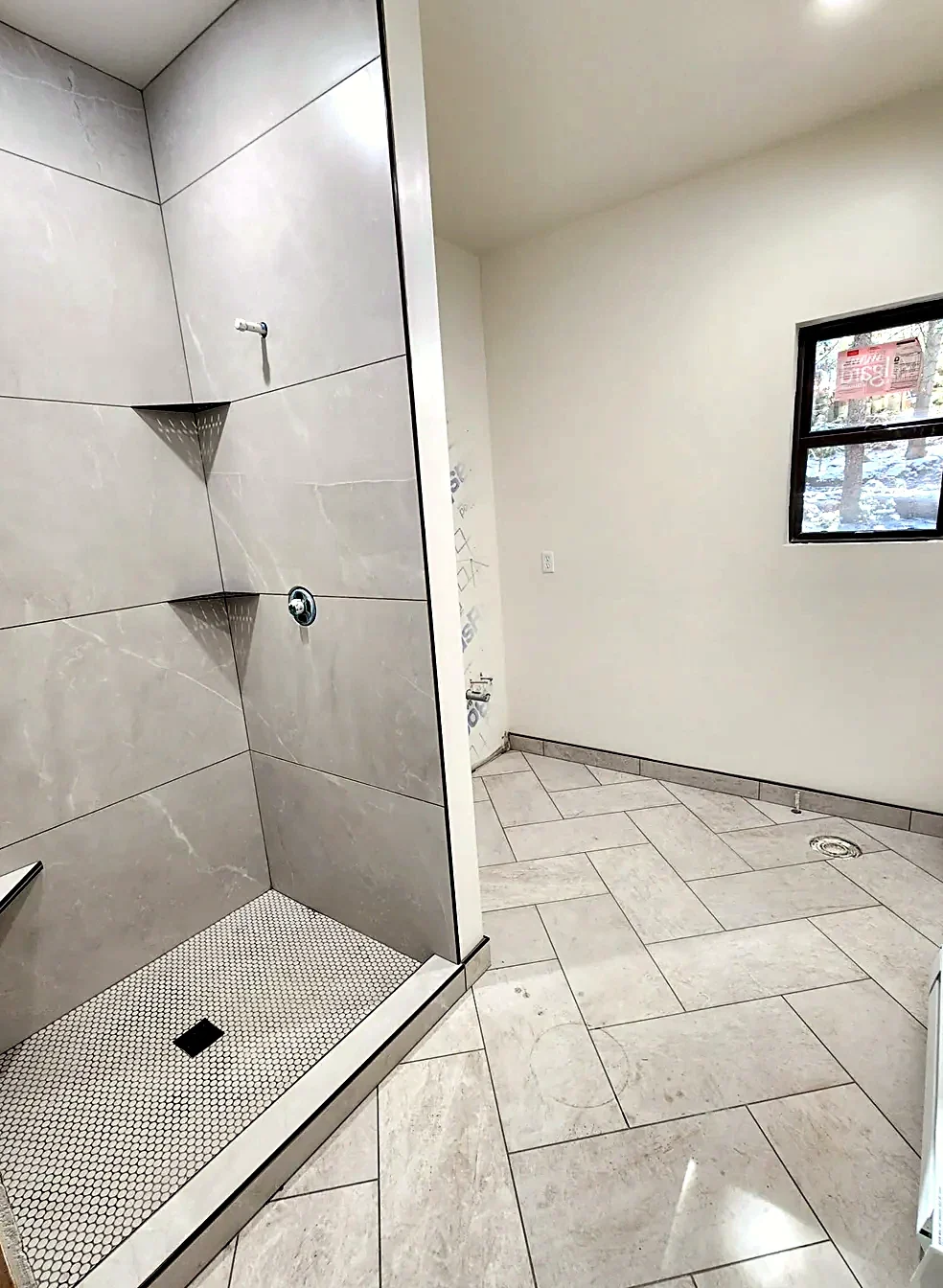
Shower tile
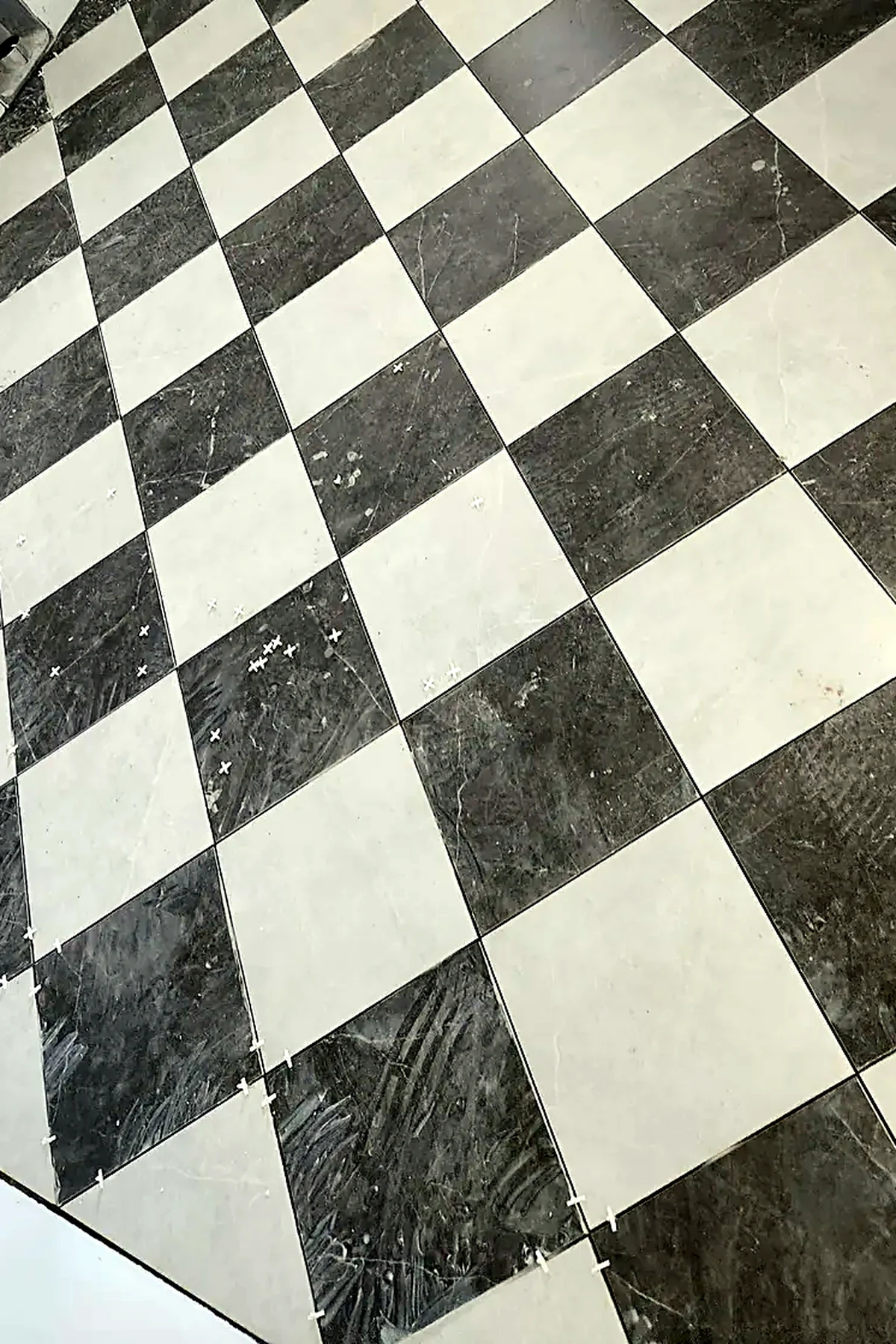
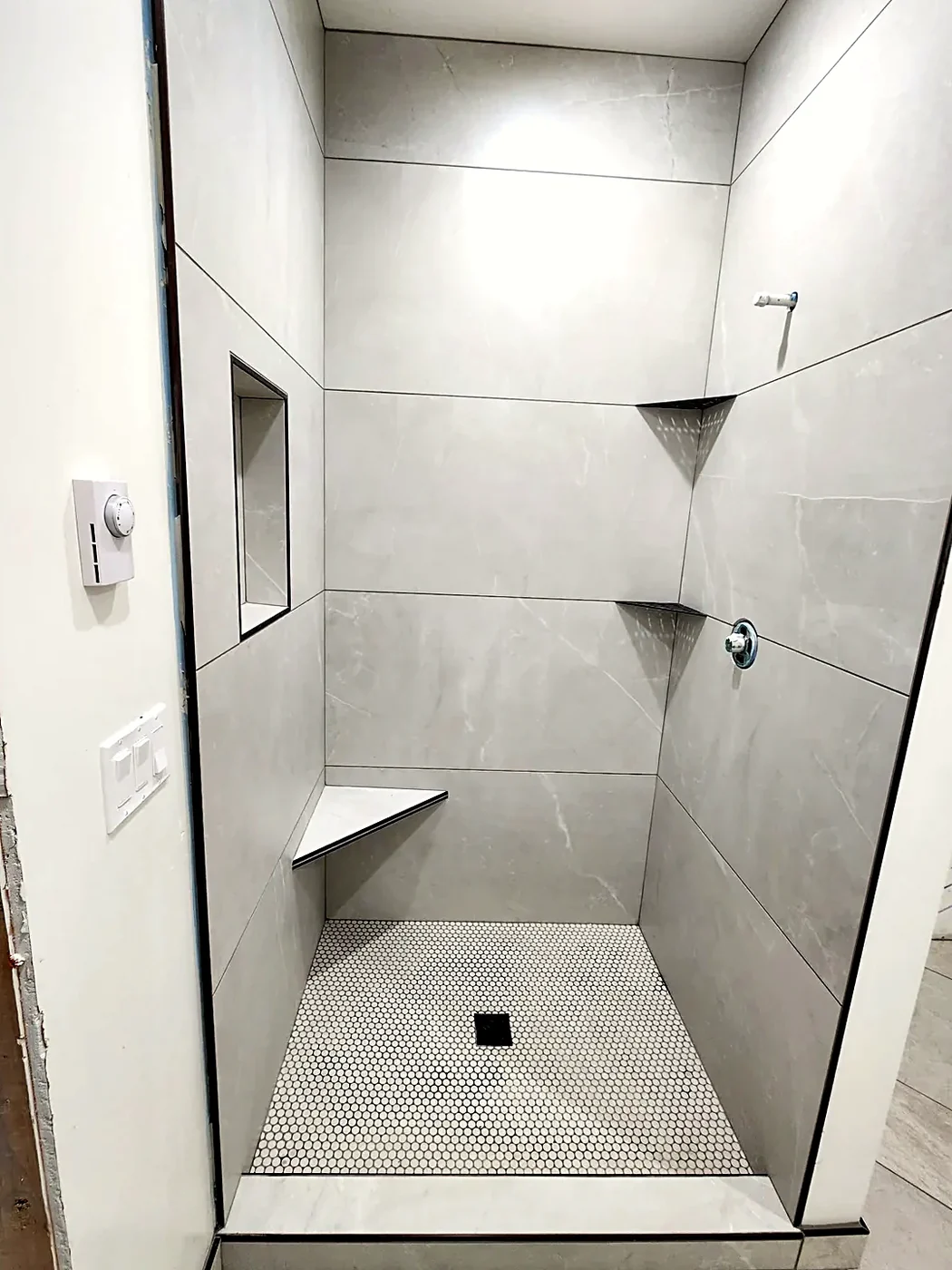
Large-format porcelain run floor to ceiling, with built-in niches and benches cut from the same slab so the veining carries through. Pans are pitched to the drain and waterproofed before anything is set. Waterproofing is the part nobody sees, and the only part that can cost you a ceiling.
- Pebble, penny-round and mosaic pans
- Recessed niches and folded corner benches
- Linear and center drains, pitched to fall
Floor tile
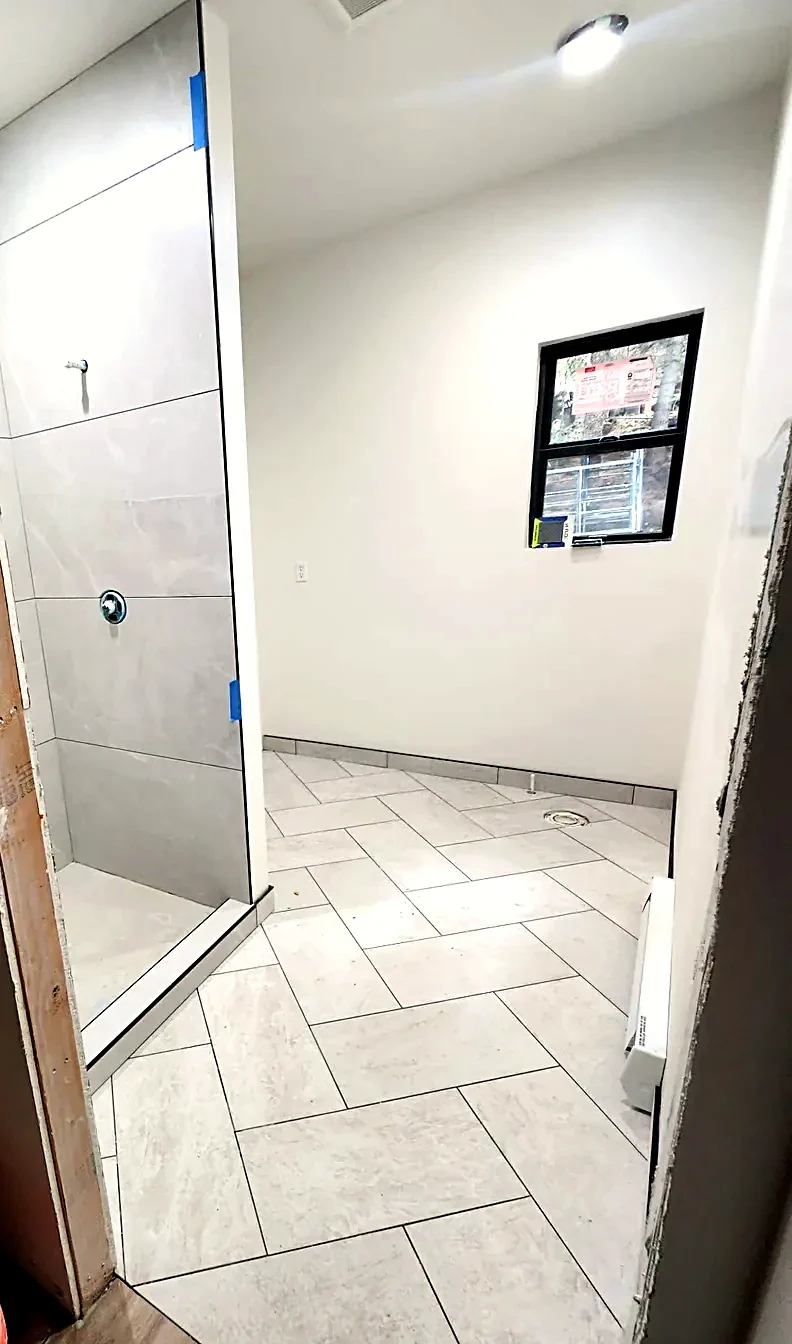
Layout is decided before anything is bonded — where the pattern lands at the threshold, which cut falls at the wall, how the lines read when you walk in. A diagonal checker leaves nowhere to hide a bad line. You will cross this floor every day for twenty years — it is worth an hour of chalk lines first.
- Diagonal, herringbone and running-bond layouts
- Large-format porcelain and natural stone
- Substrate leveled and prepared first
Pattern work
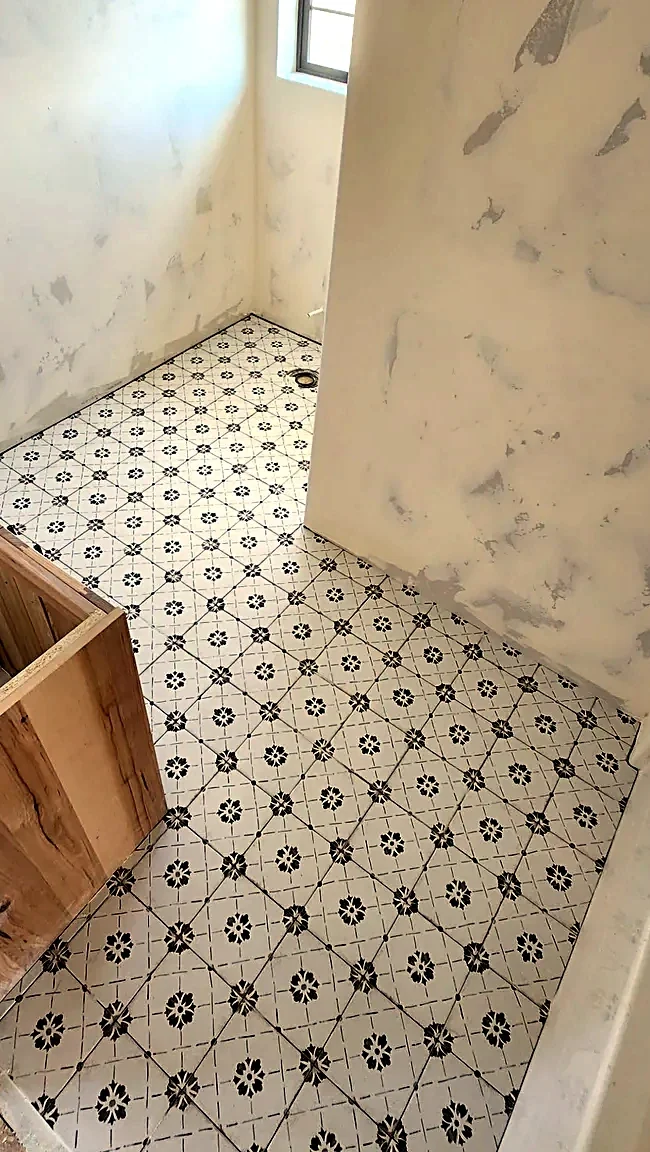
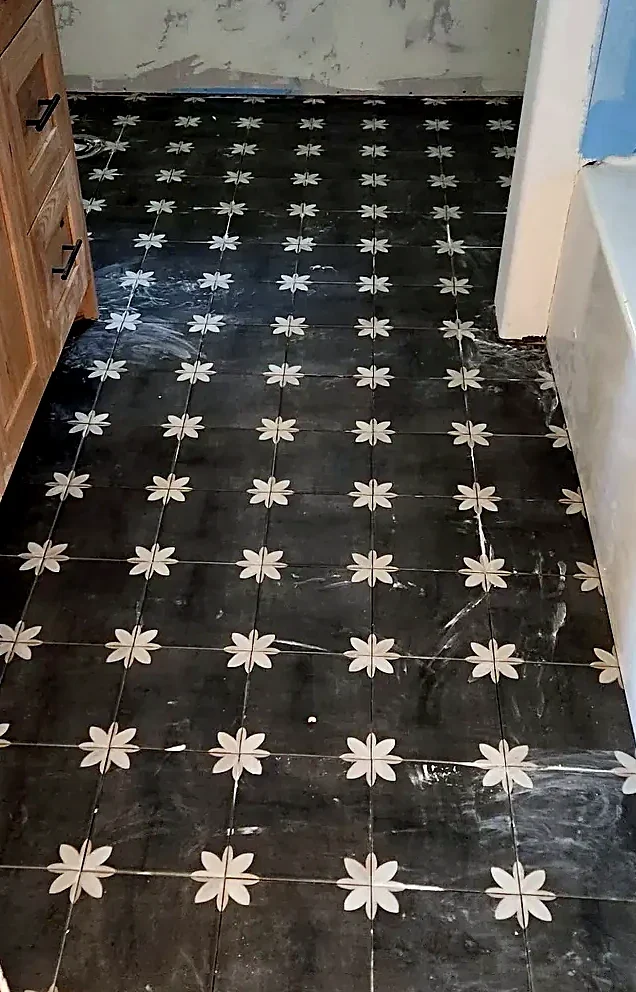
Patterned and encaustic-look work is unforgiving: the motif has to register square across the whole field, and a millimeter of drift at one wall becomes a visible break at the other. These are the floors people stop and look at, which is exactly why they are worth setting slowly.
- Encaustic-look and decorative patterns
- Mosaic accent bands and inlaid strips
- Pattern set out from the room, not the wall
Fireplace & stone
Fireplace surrounds and full-height feature walls, where the slab is the whole point. Veining is laid out dry first so it runs continuously across the joints rather than stopping at them. Dry-laying a surround costs a morning. Getting it wrong costs the slab.
- Floor-to-ceiling fireplace surrounds
- Book-matched and continuous veining
- Mitered external corners
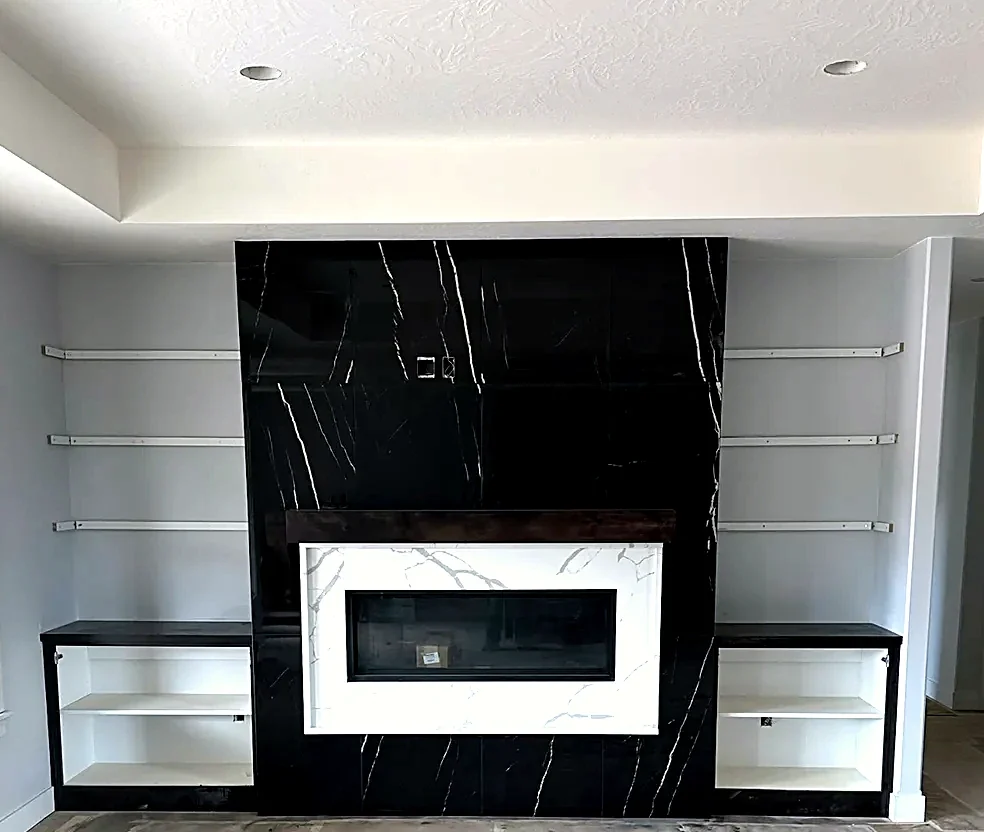
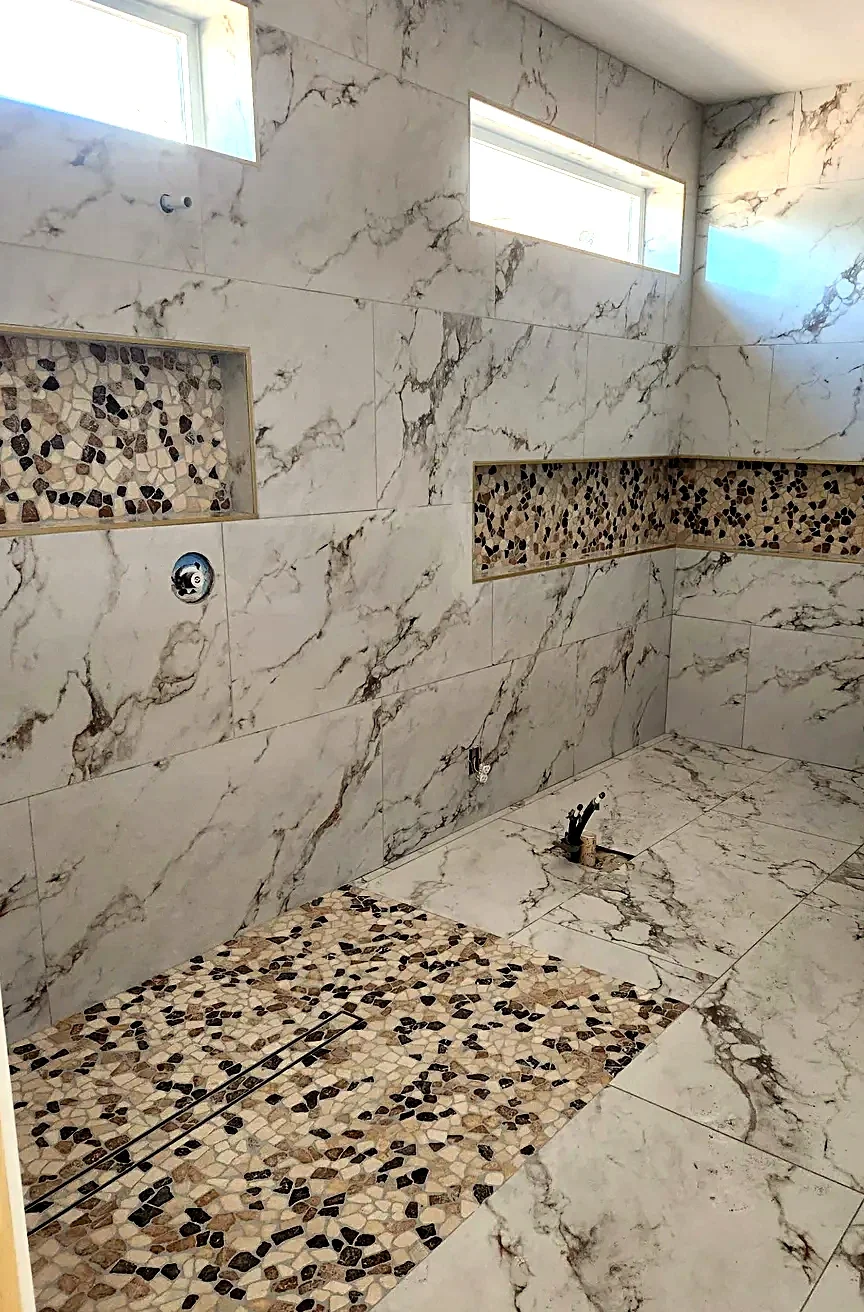
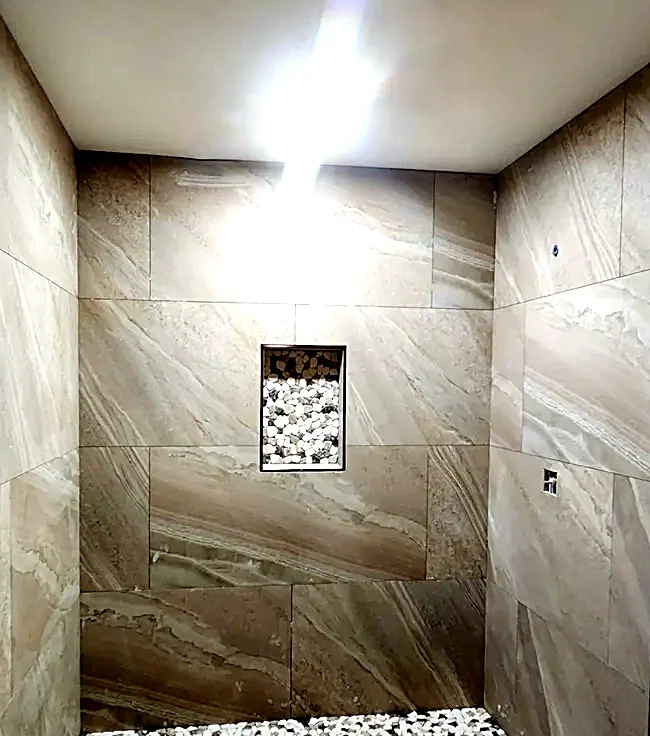
Six surfaces, close up.
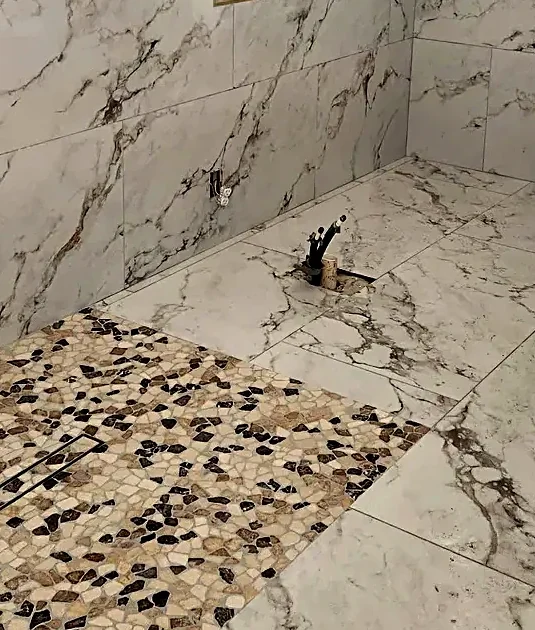
Checkerboard marble · herringbone · penny-round mosaic · pebble inlay · encaustic-look pattern · black marble. All of it ours.
Tile hides nothing.
Grout width, the fall on a shower pan, where a cut lands at the threshold — none of it can be corrected once the mortar has gone off. The hours that matter are the ones spent with a chalk line and a dry layout, long before anyone sees a finished surface. That is the part you are paying for, and the part you will never see.
See the rest of the workBefore you call
Which towns do you work in?
Southern Utah — Washington, Iron, Kane, Garfield and Beaver counties. That covers St. George, Washington, Hurricane, Ivins, Santa Clara, Cedar City, Kanab, Panguitch and Beaver.
Do you have a showroom we can visit?
No. This is a service-area business — the work happens at your place, and so does the measuring.
What kind of tile work do you take on?
Floors, bathrooms, showers and tubs, kitchens and backsplashes, commercial floors, outdoor and patio work, and repairs. Porcelain, ceramic and natural stone, in homes and commercial spaces.
What do you need from me to quote a job?
Rough dimensions of the room or the square footage, a photo of the space as it stands today, the material you are considering if you have chosen one, whether it is a new build, a remodel or a repair, and the town you are in. None of it is essential — a phone call and a description is a perfectly good place to start.
What happens after I get in touch?
We come out and measure, look at the substrate and talk through the layout. You get the estimate in writing. Nothing is ordered and nothing is bonded until you have seen that number and said yes to it.
How do you approach an installation?
Layout, substrate, waterproofing, then tile. Layout is set out from the room rather than the nearest wall, so the pattern lands where you see it and the cuts fall where you don't. The substrate is leveled and prepared before any tile is bonded, and in a wet area the waterproofing goes in and the floor is pitched to the drain before anything is set.
When can we reach you?
Monday to Friday, 6:00 am to 8:00 pm.
Do I need a permit to tile a bathroom in Utah?
It depends on the scope of the work. Straightforward tile replacement on an existing floor or shower typically doesn't trigger a permit, but if the project involves changes to the shower pan, waterproofing membrane, or other structural elements, local requirements can apply. We recommend checking with your city or county building department before starting, and we're happy to talk through what your specific project involves.
How much does it cost to install large format tile?
Cost depends on several factors rather than a flat number: the size and layout of the space, the tile material you choose, how much substrate preparation and leveling the floor needs, and any waterproofing or pattern work involved. Larger tiles often require more precise prep, which can affect labor time. The best way to get an accurate picture is a quote based on your specific space.
Can large format tile be installed on an uneven floor?
Not as it sits. Large format tile needs a flat, properly prepared substrate, since bigger tiles show lippage and unevenness far more than smaller ones. Floors that are out of level usually need self-leveling compound or other substrate correction before installation. Skipping this step leads to cracked grout lines and uneven edges, so proper prep is a standard part of any large format job we take on in Cedar City.
What should I look for when hiring a tile installer in Utah?
When hiring a tile installer in Utah, look for proven experience with waterproofing and membrane systems, since a shower or floor is only as good as what's underneath it. Ask how they handle large-format tile, check that they're comfortable with natural stone, and make sure they offer a written scope before work begins. At Prudence Construction, we walk Cedar City homeowners through every step before we start.
Who is the best tile installer in St. George, Utah?
There's no single 'best' tile installer since the right fit depends on your project, but look for a contractor who specializes in tile specifically, understands waterproofing for showers and wet areas, and is comfortable with large-format and natural stone materials. Prudence Construction, based in Cedar City, serves homeowners and commercial clients throughout St. George and the rest of Southern Utah.
How do I install porcelain tiles?
Installing porcelain tile starts with a flat, properly prepared substrate, since porcelain won't flex and will crack over an uneven base. From there it's layout planning, the right thinset for large-format tile, setting with spacers for consistent grout lines, and proper cure time before grouting. In wet areas like showers, waterproofing membranes go in first. We handle this for homeowners throughout Cedar City and Southern Utah.
Tell us about the room.
Send the dimensions, the material you’re considering, and a photo of the space as it stands — or call and describe it. We come out and measure, then put the estimate in writing before anything is ordered.